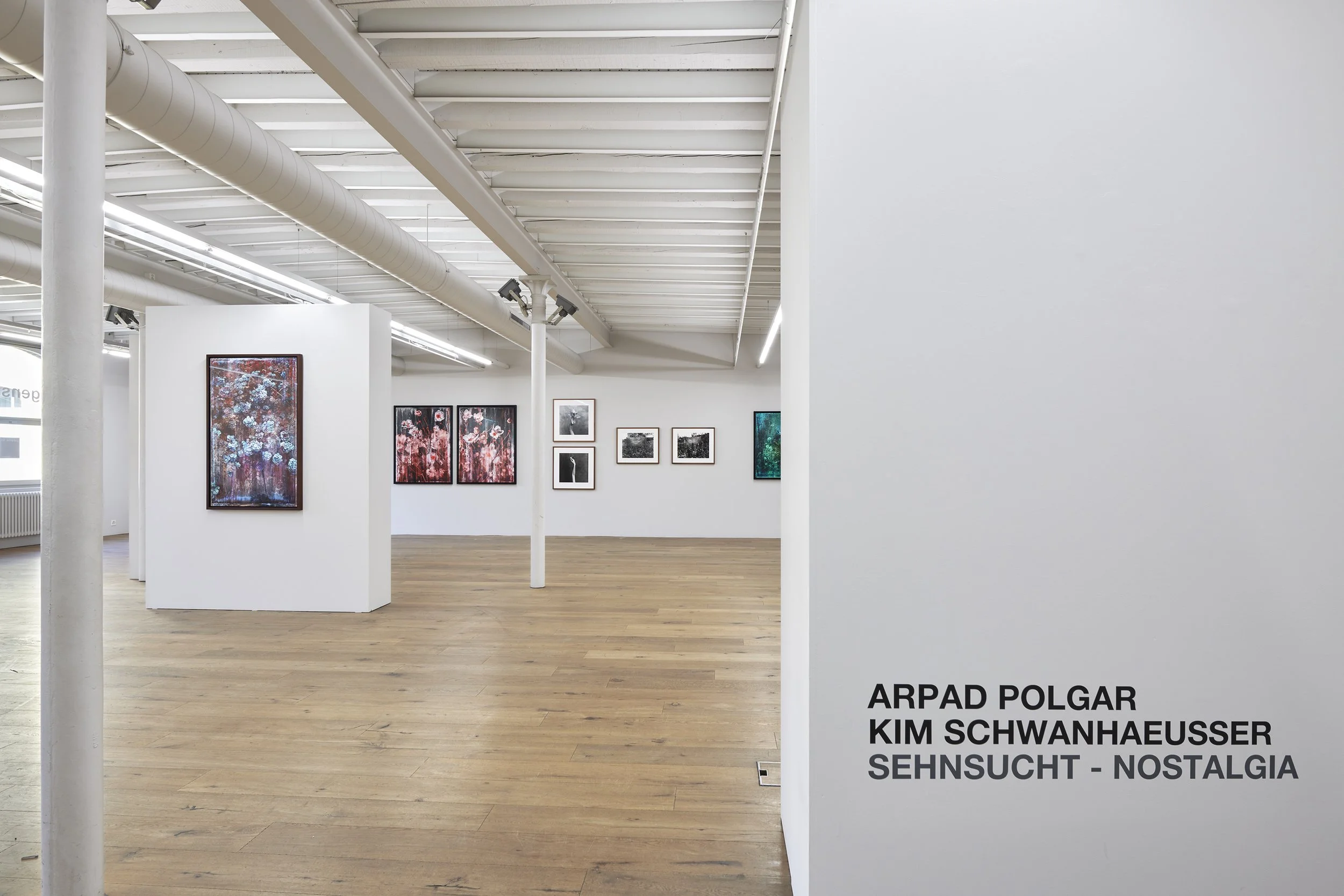
Arpad Polgar
Kim Schwanhaeusser
Sehnsucht – Nostalgia
Exhibition:
March 13 to April 25, 2026
Opening:
Thursday, January 12, 2026, 18.30h
Introduction by Catrina Sonderegger, free curator
Artist Talk:
Saturday, March 28, 2026, 15h
Finissage:
Saturday, April 25, 2026, 13-17h
Kim Schwanhaeusser and Arpad Polgar will be there!
Opening hours:
Wednesday to Friday 17-19h
Saturday 13-17h
or by appointment
Sehnsucht – Nostalgia
[The expression of Nostalgia can only offer an approximation of the German “Sehnsucht”. The latter translates literally as “addiction to yearning” and carries the rich heritage of German Romanticism]
A differential between human conscience of its finitude and the unlimited capacity of imagination to project itself towards any idealized space-time-dimension, appears to be at the core of the existential ache called Nostalgia. Whenever the rift between romantic mind-projection and an immediate, more trivial reality cracks open, it exudes a compelling lure coming from a lived or imagined elsewhere, situated in the past or in a conjectured future past. The soul torn between the “here and now” and a distant Paradise Lost is on an impossible quest. Such a fallen angel will suffer from infinite yearn to reach the unattainable, idealized place in time.
In a romantic appreciation, the alienation of mankind from its origins and the growing distance from primal and unfiltered sensual experiences stir an irresistible need for a homecoming to natural conditions. Insofar, idyllic Nature has culturally and traditionally served as a symbol and promise for the imaginary escape from the contingencies of our human condition.
The mechanism of photography captures and preserves an imprint of the fleeting moment that has been in midst continuous and intertwined fluxes of infinite occurrences. In their basic functionality, photographs serve as anchor points for personal or collective memories. They complement our own fragmented cerebral recollection. In a more complex interpretation, a photographic trace can become a surface of projections for our outwards striving Nostalgia. Igniting memory, imagination and want, such a pictured proof may sketch the vanishing points of our innermost yearnings, of homesickness or wanderlust: a personally experienced situation, a past we never lived, utopic future or places we will never see (anymore).
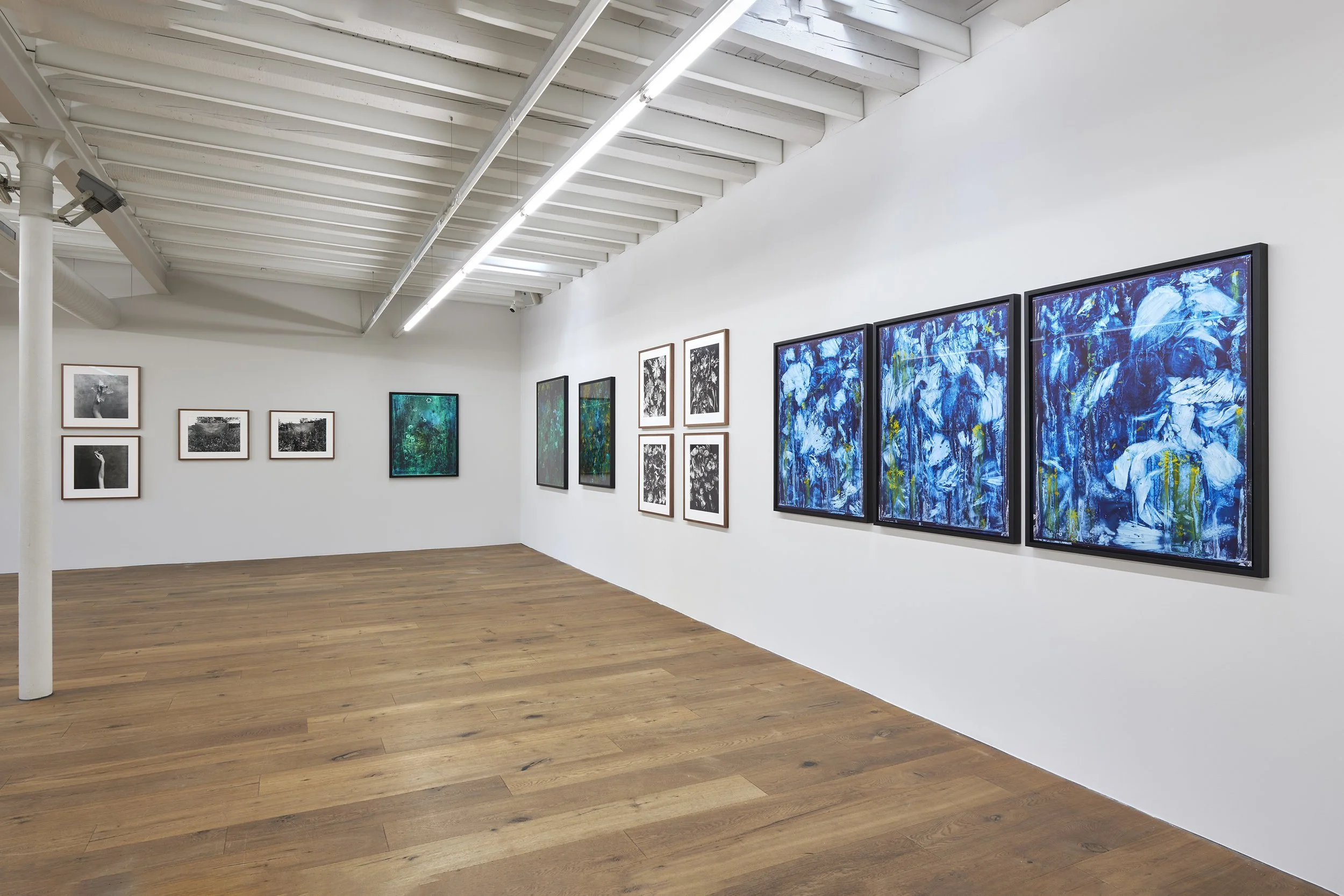
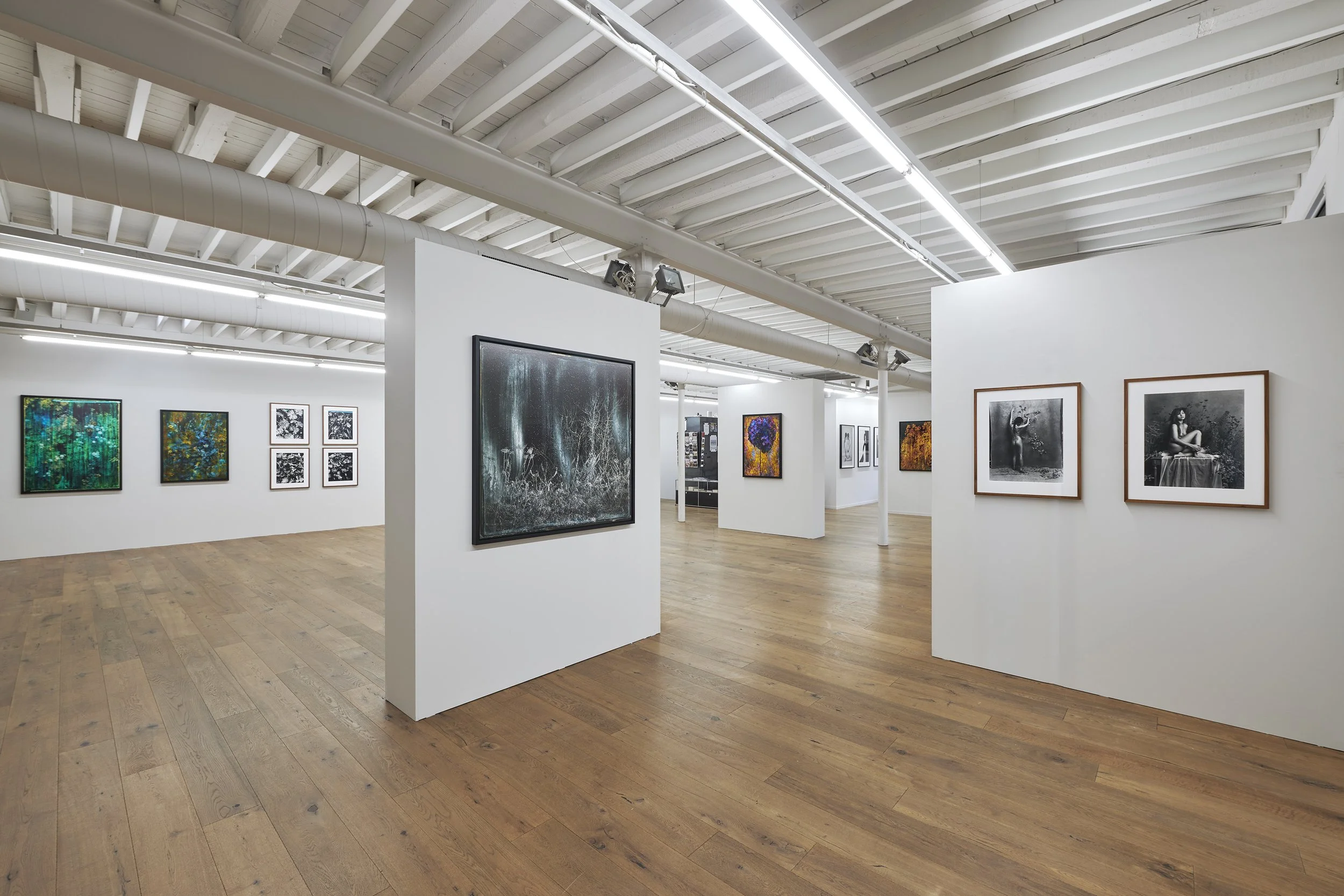
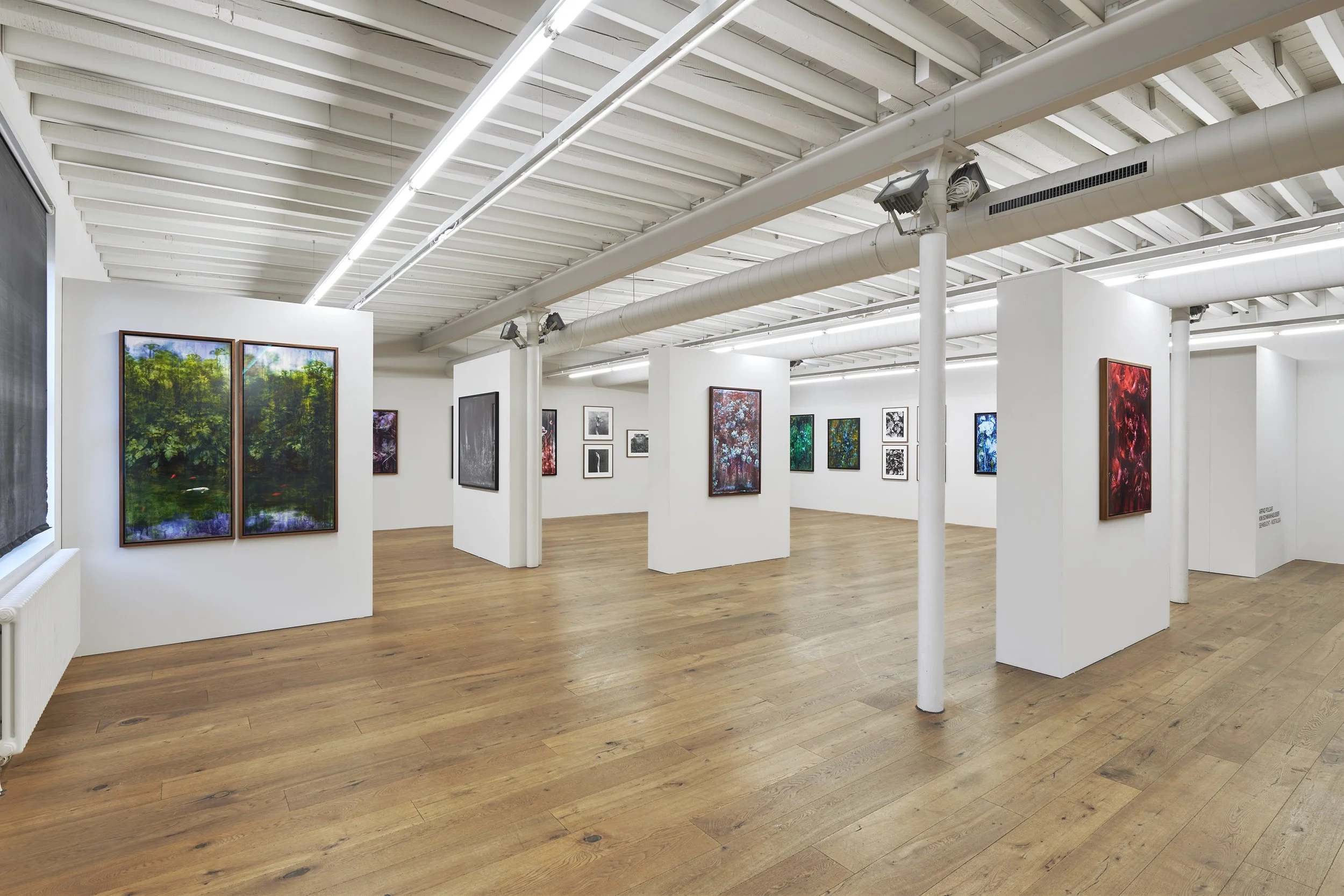
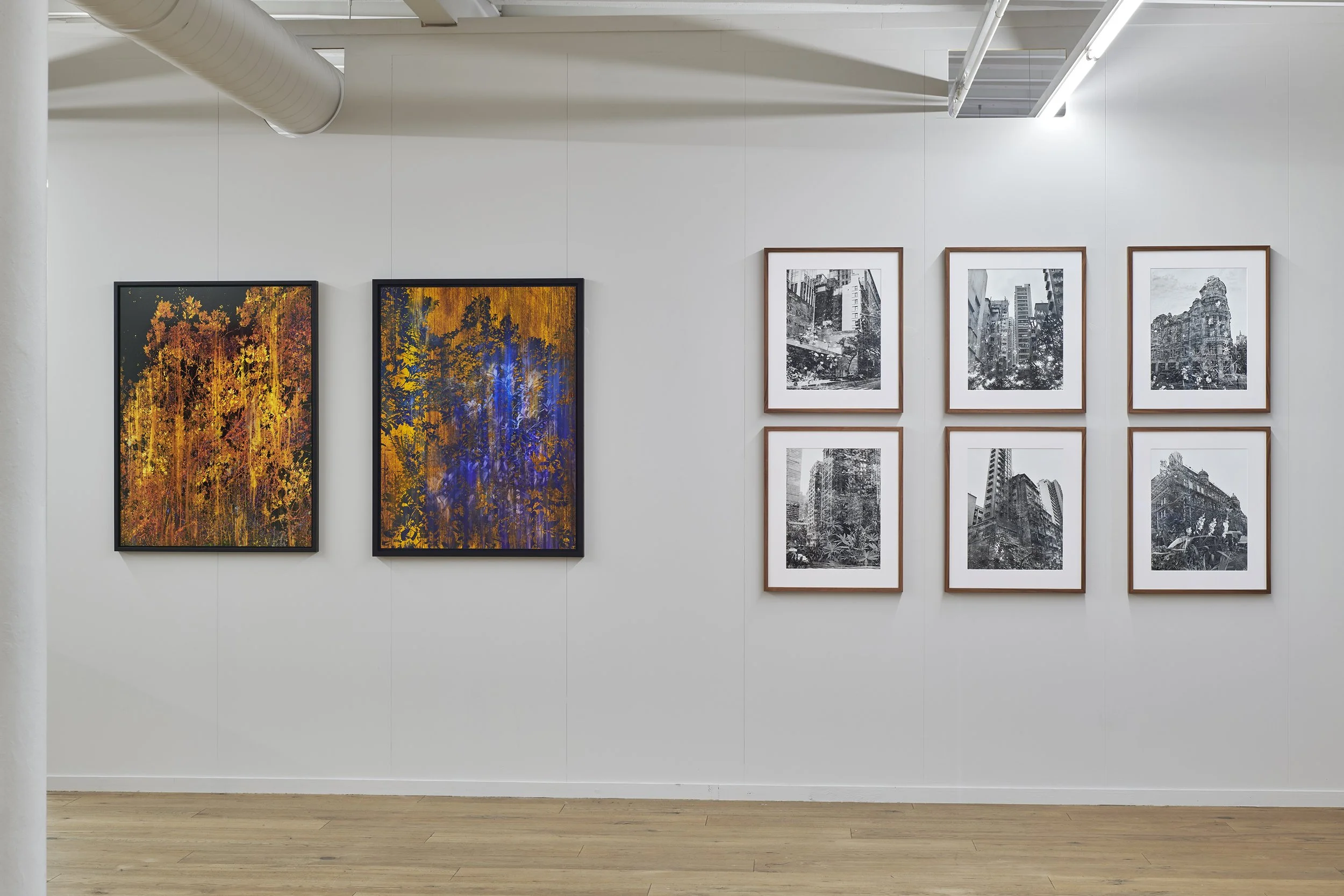
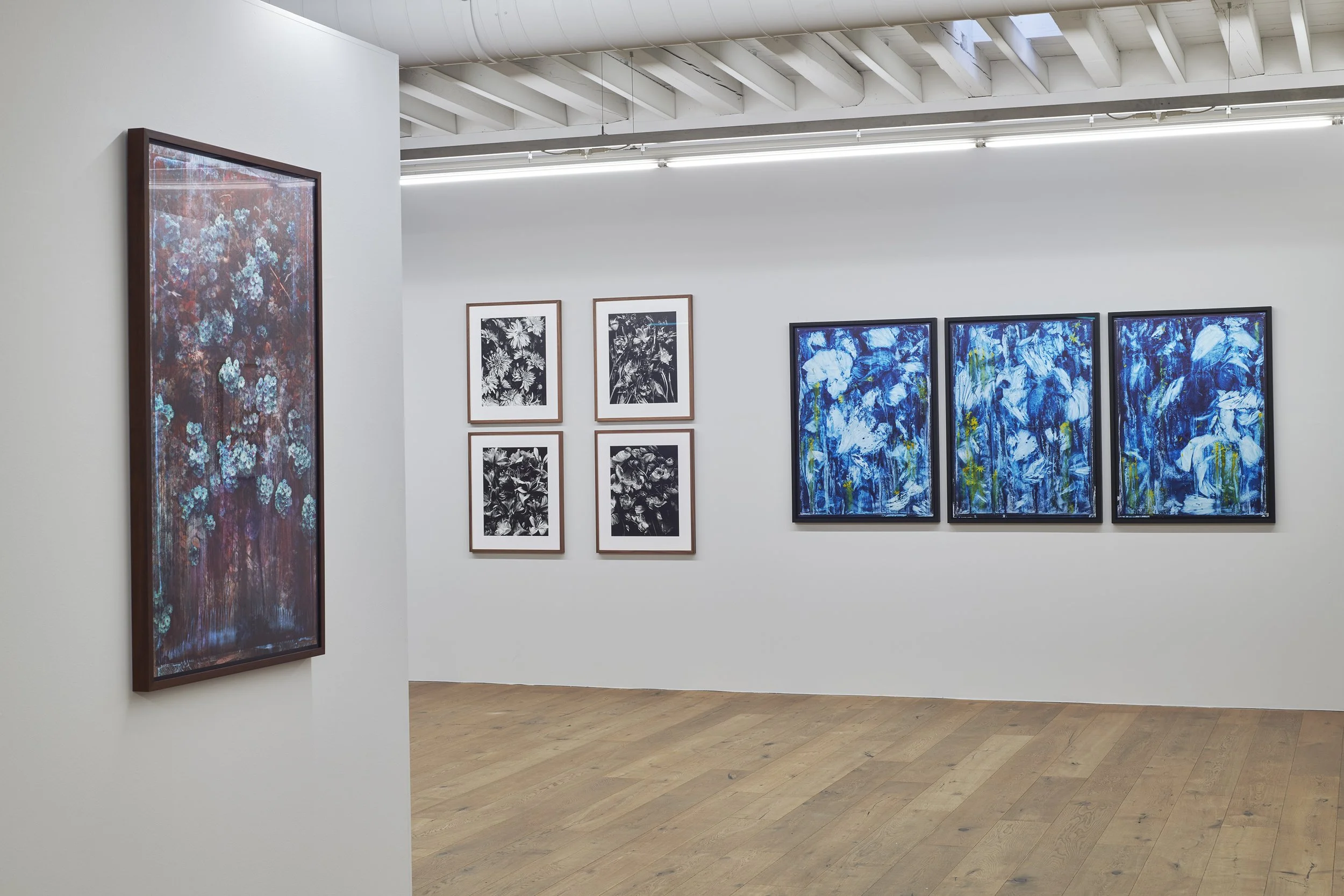
Kim Schwanhaeusser and Arpad Polgar show that their attachment to Nature and its phenomena are central to their respective artistic endeavors, as source of inspiration and treasured refugium at once. Their mutual influence and interplay can be found in some of their works, as they occasionally explore the same locations or arrange studio scenes together. Yet, even when working on identical scenographies, they insist on their distinct individual language and grammar in their ingestion of the photographic object.
Both artists display a common obsessive desire to harvest their imagery from natural resources and landscapes that resonate in their romantic consciousness and relate their intent to study the divergence between existential limitations and the infinitude of imagination. Throughout their works, the constant return to Nostalgia seems to imply an embodiment of the proclivity for a lost or a distant elsewhere as if, conclusively, the longing itself was more enviable than resorbing the friction between existence and imagination.
Kim Schwanhaeusser, born 1991 in Hong Kong, after studying biology, works as freelance photographer and artist between Germany and Switzerland
Kim’s artistic approach is substantially an homage to the tradition of analog black and white photography, as she self-develops her negatives and prints with meticulous care in her own darkroom. Hence, her works present a reminiscence of a past and almost lost craftsmanship which breathes life into silver halogens by the combined reaction between light and chemical processes. The analog medium emphasizes a conscious slowing down that suits her gentle circling in on the subject matter.
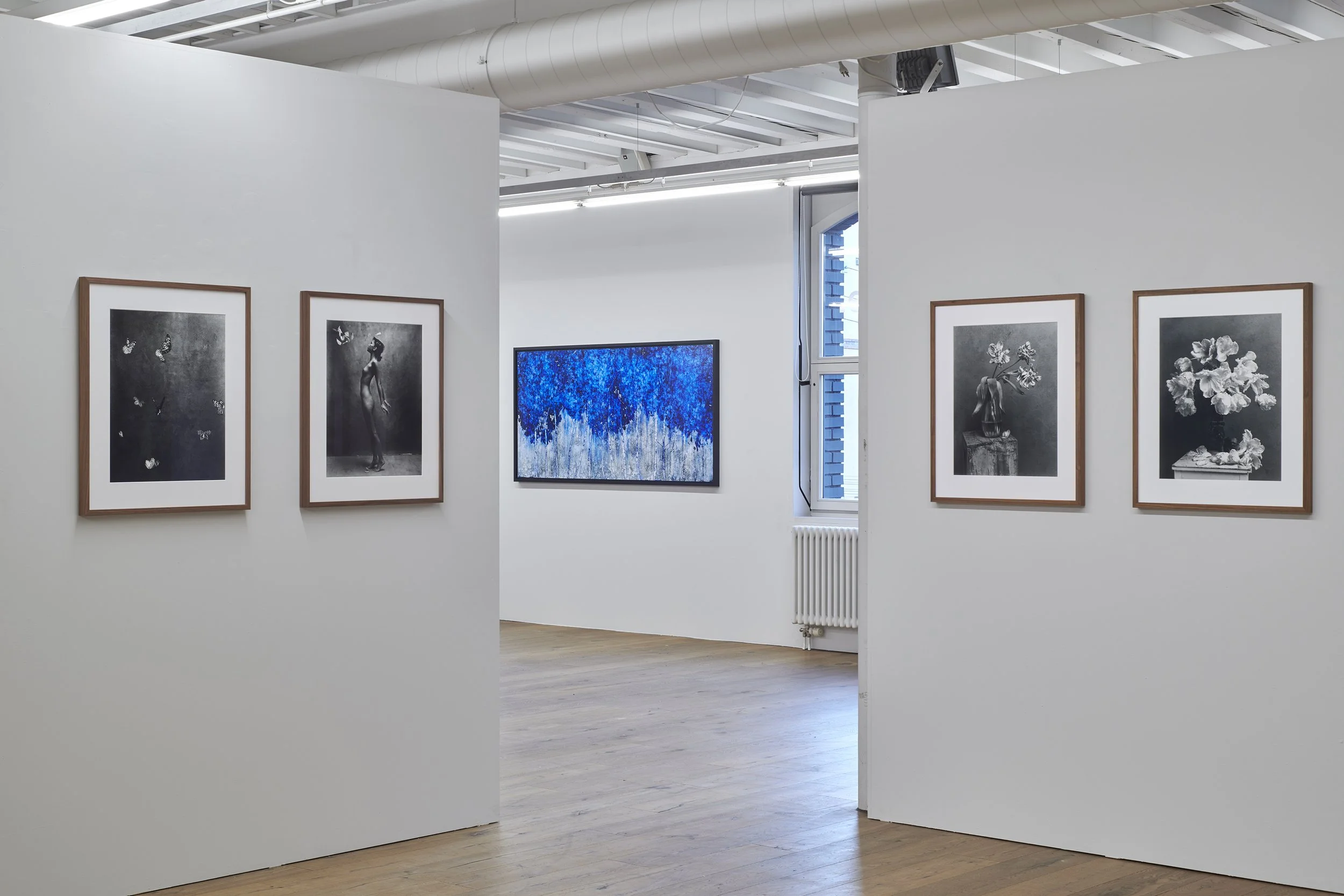
In her body of work, Kim reveals her desire to study and celebrate the natural miracles in which she sporadically embeds retrospective musings on personal experiences and childhood memories. Her sensitivity discloses the subtleties of life forms, depicting photographic objects faithfully with all apparent “imperfections”. The connection with nature is omnipresent, encompassing staged wildflower fields, opulent still lives, dancing butterflies, dreamlike nature-cityscapes, mystical forests and self-portraits examining the depth of her intimacy and vulnerability. Kim’s artistic journey is an everlasting pursuit for her own place in the world as she seeks for a lost past and its fragments of memory. By peeling away the superficial layers of normative appearance and expectations, she probes for the point of origin hidden beyond beauty, within the simplicity of natural essence.
Arpad Polgar, born 1967 in Geneva, photographer and artist, exhibitions in Switzerland and abroad since 2001, lives and works in Switzerland
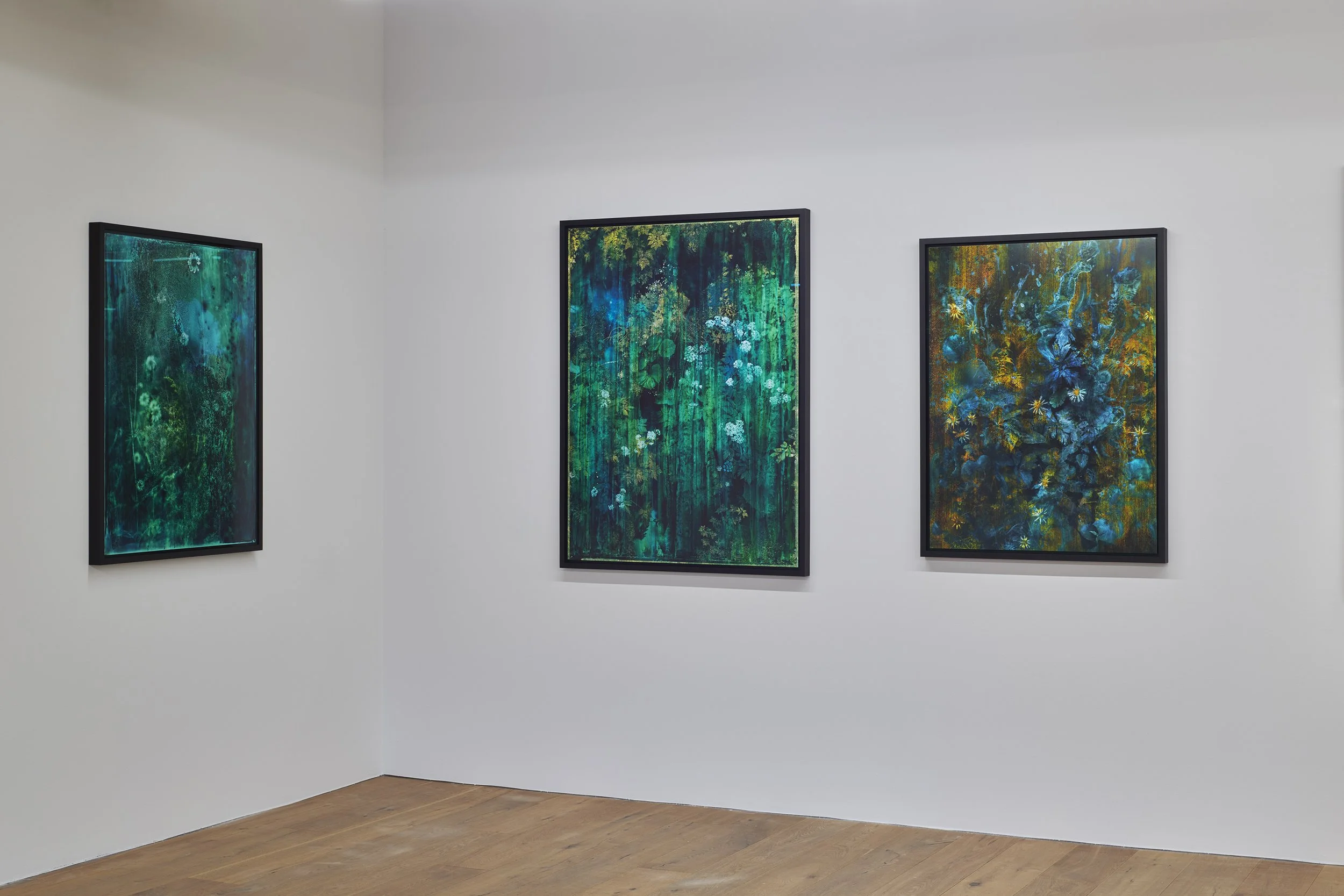
Arpad’s scrutiny of natural phenomena stems from a lifelong quest to understand nature’s processes in an accession that progressively morphed beyond forthright rapture and primarily dialectical questioning towards a more emotional and contemplative agreement with unsolved complexities of immensity. His visual methodology is centered on an obvious and insatiable appetite for the cycles of metamorphoses, for infinitesimal details and structures of growth and dissolution, of bloom and decay. In his artistic practice, photography seemed a fitting tool to define a starting point: the systematic extraction, dissection and collection of typologies taken out of their natural fluxes, enable the necessary time-independent inspection of a fleeting condition of a chosen phenomenon.
By iteratively shifting away from mimesis, Arpad gradually abandoned the naturalistic cliché to create symbolic representations, noticeably inspired by the aesthetics of Japanese Edo paintings. Exploring the fringes of photographic replication, he ventures by immersion in a recomposed universe of scattered and superimposed fragments and objects of nature, amalgamated with artefacts of apparently random fragments of paintworks and textures. The accumulation of discrete moments and patched-together scenes model newly reconfigured topographies, evanescent gardens or transfigured botanical anatomies. The creative process, tracking down the furtive and the multiple, resembles a parallel metabolism replicating the eternal cycles of contraction and expansion, reverberating an ode to the cosmos.
Paper Kite Dance, 2021 © Kim Schwanhaeusser
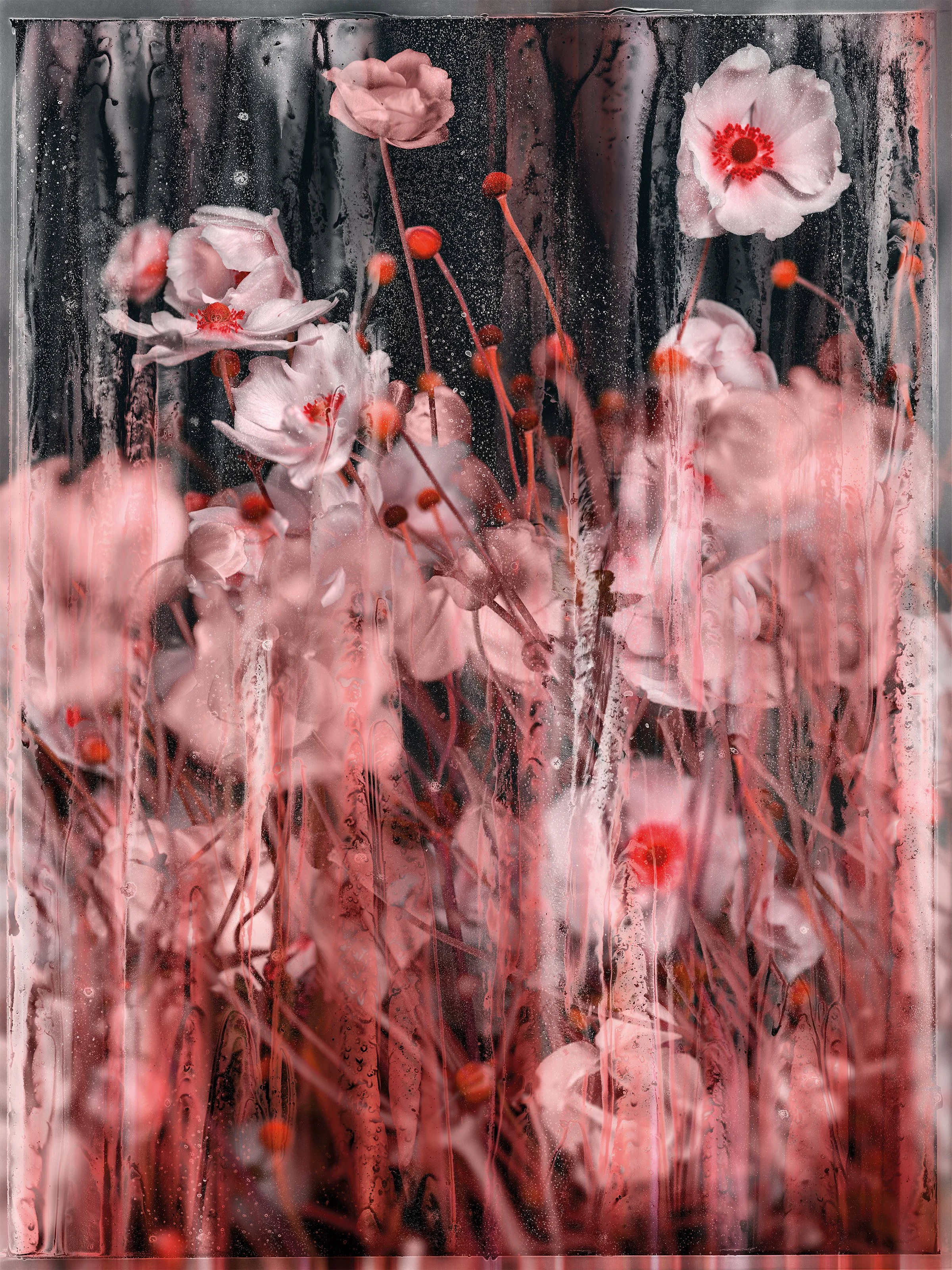
Aphrodite left, 2021 © Arpad Polgar